
Certificate of Residence (zairyū shōmei)
Japanese institutions ask for this certificate in situations where a domestic resident would produce a jūminhyō: inheritance, property, bank and pension matters. Because you live abroad, the consulate issues the equivalent.
What you have to state
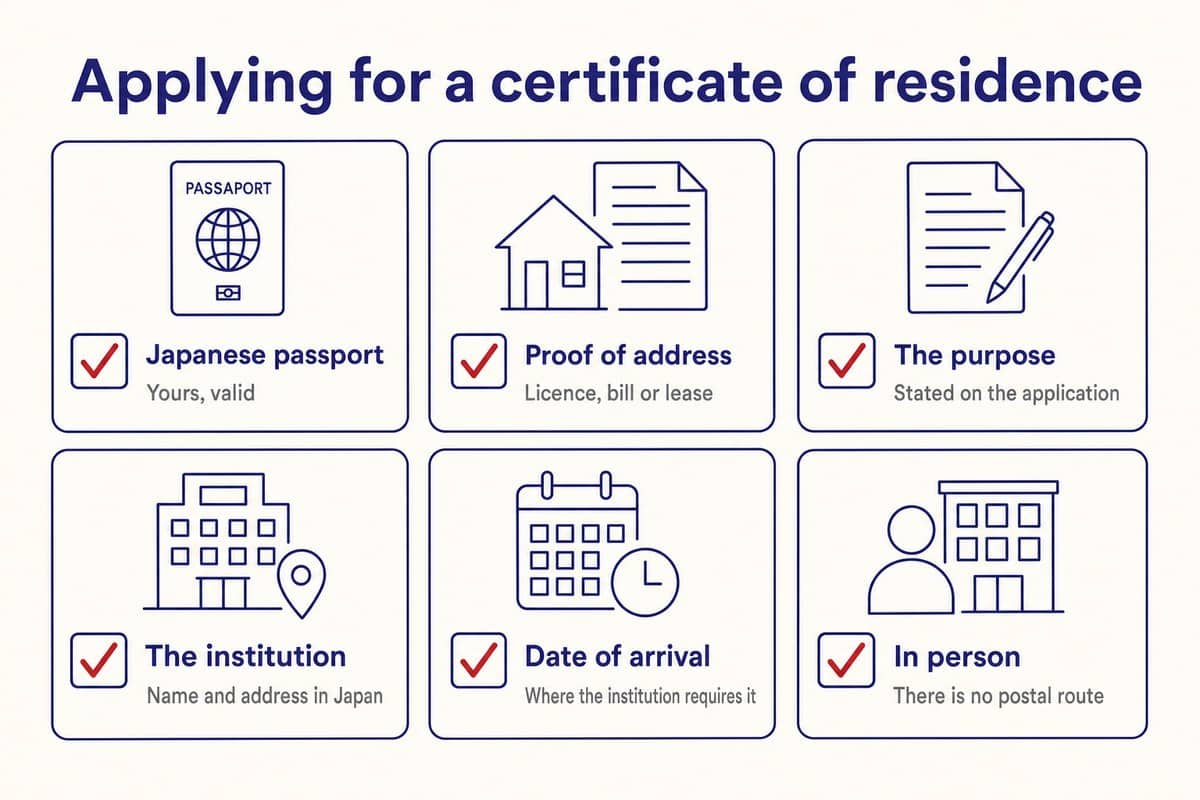
The application asks for the purpose and the institution that will receive it. That is not bureaucratic curiosity: the certificate is issued in the form that institution requires, and a certificate issued for the wrong purpose is refused.
The evidence
The other certificate people confuse it with
The signature certificate is a different document. It certifies that you signed in front of the officer, and in Japan it does the job that a registered seal, the inkan shōmei, does for a resident. It is used for inheritance distributions, sworn statements and contracts.
Both are issued in person. There is no postal route, which is a real obstacle for anyone elderly or unable to travel, and reviewers at more than one consulate raise exactly that.
Where it is used most
Inheritance is the commonest reason. When a Japanese estate is divided, every heir has to be identified and located, and an heir living abroad supplies the certificate of residence in place of the residence record a domestic heir would provide.
Property transactions and pension claims are the next two, and banks occasionally ask for it when an account has been dormant.
The date of arrival
Some institutions require the certificate to state the date you began living at the address. If yours does, bring documents going back to that date: a lease, a bill, a bank statement.That requirement is the reason a second visit happens. The consulate cannot certify a date it has no evidence for.
Together with the signature certificate
Inheritance files usually need both this certificate and a signature certificate. Ask for both in the same visit: they are issued by the same section and both require you to be present.